
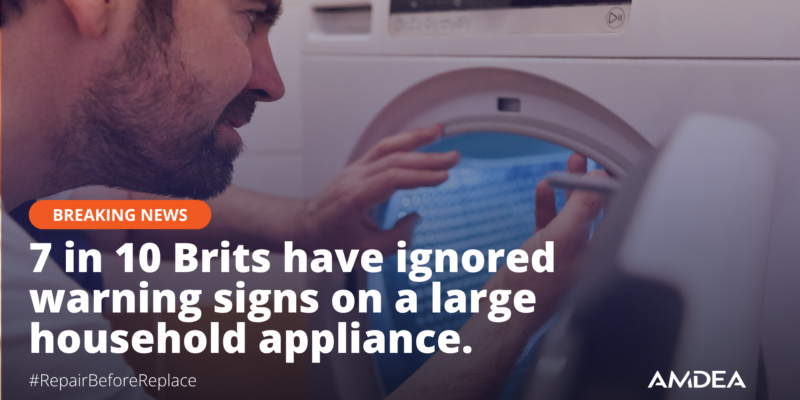
Seven in 10 Brits have ignored warning signs on a large household appliance, including overheating, error messages, funny smells – and even water leaks. A study of 2,000 adults found 40 per cent did so because the appliance was still appearing to work, while 33 per cent simply hoped the issue would resolve itself.
And 22 per cent owned up to replacing their large household appliances, such as a washing machine or dryer, at the first sign of trouble rather than trying to fix them. While 56 per cent of those admitted the last item they replaced may have been repairable, despite 54 per cent of all participants agreeing they have needed to scrimp and save over the past three years due to the cost-of-living crisis
The research was commissioned by the UK’s trade association for home appliances, AMDEA.
Commenting on the findings, consumer journalist Alice Beer said: “It’s clear from the research that when something goes wrong, replacing an appliance is often the default position. But what many people may not realise is that repairs by a good engineer are often much simpler and more affordable than they expect, so it can pay to pause before you replace. Simple habits can also make a real difference too. Spending a few minutes cleaning filters and carrying out routine maintenance checks, for example, can help keep appliances working well, reduce the risk of faults and potentially add years to their lifespan. We know household budgets are under pressure so every saving counts. That’s why, when something goes wrong, my advice is simple – think repair first. The reality is that a small, quick fix could save you money and help your appliance go further.”
The research also found people have spent an average of £399 replacing items which have had issues over the past three years.
Meanwhile, when a household appliance develops a problem, only 11 per cent contact a repair engineer as a first point of call.
And 66 per cent have considered replacing a large household appliance at the first sign of trouble rather than investigating whether it could be repaired.
The most replaced items without checking for repairs were washing machines, microwaves and fridge freezers.
The biggest concerns around arranging a repair were the potential costs (49 per cent), the appliance being too old (32 per cent) and worries the repair won’t last (29 per cent).
While 33 per cent would be frustrated if they discovered they spent money on an unnecessary replacement, with 21 per cent determined to make sure they don’t do that again.
And 24 per cent are not confident they know whether their large household appliances are covered by warranty or not, according to figures from OnePoll.com.
Experiences from those who have had repairs were generally positive – 47 per cent said the engineer was reliable, 40 per cent had years of extra use thanks to it, and 33 per cent said it was easy to arrange.
Stefan Hay, CEO for AMDEA added: “Too many consumers are writing off appliances before understanding what the problem is or whether a repair is possible. Our findings show that concerns around cost and convenience are often driving replacement decisions, but repairs are frequently more straightforward and affordable than people expect. We’d encourage anyone experiencing an issue with a household appliance to check their warranty status and explore repair options before replacing it. A simple repair can often add years to an appliance’s lifespan, saving money and reducing unnecessary waste at the same time.”
For help and advice on expert repairs visit: amdea.org.uk/repairs