
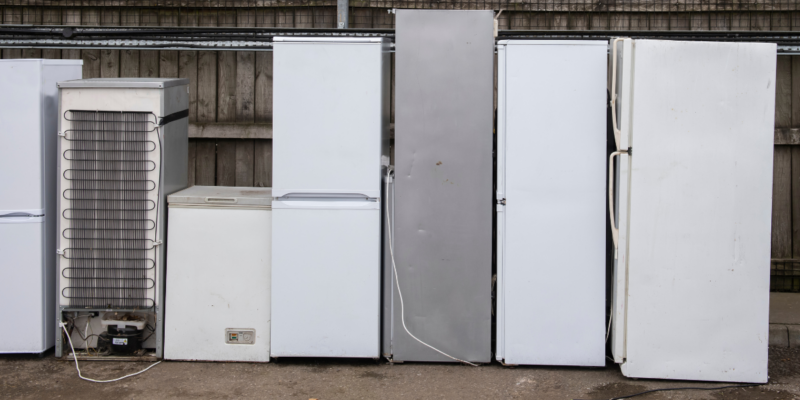
The current refrigerator recycling backlog is due to a number of closures of specialist refrigerator recycling plants in recent months due to fires and the liquidation of one major plant in Newport. This has had a knock-on effect for Producer Compliance Schemes and local authorities in several areas over the very hot summer, resulting in the temporary storage of fridges and freezers that would normally be sent to these recycling plants in a timely way.
Appliance producers meet their obligations under the WEEE Regulations through membership of Producer Compliance Schemes, which arrange for WEEE to be collected and delivered to approved treatment facilities on producers’ behalf. The costs borne by producers through these arrangements help finance the collection, treatment, recovery and recycling of household WEEE, including appliances collected at local authority designated collection facilities, which accounts for about 50% of fridge recycling, the other 50% of fridges are recycled by appliance producers and retailers. According to official Defra data, 70,000 tons of fridges have been responsibly recycled in the UK so far this year. Companies like the Appliance Recycling Group will also collect an old fridge from your home. They’ll check if it’s suitable for reuse and if it is they will refurbish it and find it a new home. If it isn’t, they ensure it’s responsibly recycled. They can be found at http://collectmyelectricals.co.uk/. Retailer AO will also collect a fridge and recycle it for a fee even if you have not purchased a new one with them. We urge consumers to seek reputable companies if they need a fridge to be recycled to avoid fridges being dumped.
We understand that the situation has started to ease a little in some areas as additional treatment and storage capacity becomes available, with further specialist facilities due to open over the next couple of years, and that there is currently spare fridge treatment capacity in Europe, so it is possible that some of the backlog of fridges needing to be recycled will be sent to approved specialist plants abroad.
In terms of new specialist recycling plants in the UK, GAP in the North East opened a new fridge treatment plant in Scotland last year. It’s state of the art and uses renewable energy to power it. Enva plans to open a new fridge treatment plan in Dartford in 2027. These investments are only possible because of the money producers and their compliance schemes pay for fridge recycling. If it wasn’t profitable they wouldn’t invest in new plants.
Whilst the current issues in refrigeration are hopefully relatively short term, brought about by a ‘perfect storm’ of issues, we recognise that it does highlight the fragility of the supply chain and that more specialist recycling facilities need to be encouraged. AMDEA has already called on all stakeholders to work collaboratively with industry to support sustained development and investment in the UK’s recycling infrastructure and help build the capacity and resilience needed to prevent similar disruption in the future, as well as recycling facilities that meet future needs and recycle to the highest standards. Part of that is sharing with recyclers how producers see markets and technologies will develop in the coming years, allowing recyclers to design plants for the future and to give them the confidence to invest now. At the same time, we recognise that producers have an important role to play in closely managing their own relationships with their Product Compliance Scheme operators and ensuring that their obligations under the WEEE regime continue to be effectively met.