
The UK Home Appliance Association (AMDEA) is calling for Government to work together with business to create the policies needed to build resilient, long-term UK recycling capacity.
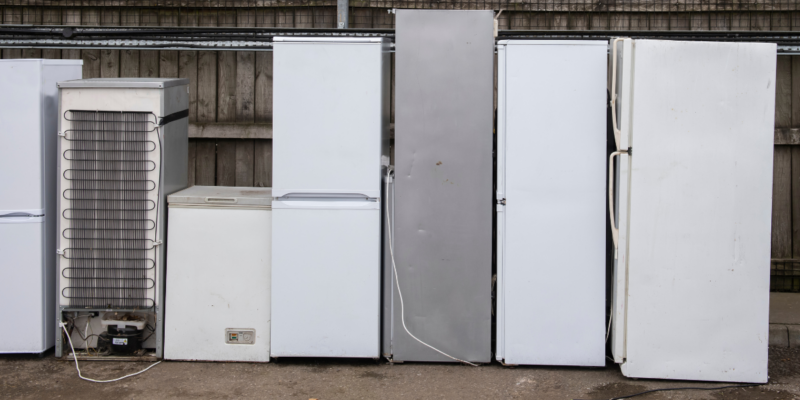
The UK fridge and cooling appliance treatment and recycling capacity is currently under pressure following the closure of major treatment plants. This loss of specialist treatment capacity is placing pressure on collection systems, treatment operators, compliance schemes, local authorities and appliance producers. Defra has announced that they recognise that temporary storage arrangements may be required until new treatment capacity becomes available and that these should be funded by the Producer Compliance Schemes (PCS).
AMDEA CEO Stefan Hay says: “Appliance producers already pay millions every year to fund the collection and treatment of waste electrical equipment through the UK’s producer responsibility system (the Waste Electrical and Electronic Equipment Regulation or ‘WEEE’).Years of under-investment and a lack of incentives for recycling businesses to invest in infrastructure have now left parts of the UK’s recycling system dangerously exposed. This means that there simply isn’t enough specialist recycling capacity currently following the recent closure of major recycling facilities.
Whilst we welcome Defra’s recognition of the issue we are concerned that temporary storage addresses a symptom rather than the underlying cause.
The Government needs to understand that this is not something that can be solved by asking appliance producers to pay even more, and in fact producers are not in a position to do so and are themselves facing higher costs due to the current lack of recycling capacity.
We need policies that encourage investment before capacity becomes critical. Building and operating specialist treatment centres requires substantial capital investment, technical expertise and regulatory approval. Government and industry must work together to create the certainty and incentives needed to build resilient, long-term UK recycling capacity and that does not mean placing an even greater financial burden on manufacturers alone to shore up a systemic lack of resilience in the UK’s recycling infrastructure .”